Written by Dr Mark Wilshere and Dr Marc Crutchley, GMC-registered GPs and founders of Dr Marks. Medically reviewed by Dr Mark Wilshere MBChB MRCGP DCH BSc (Hons).
The short answer: women aged 19 to 49 need 14.8mg of iron a day, almost twice as much as men (8.7mg). Periods are the main reason. Common signs of low iron include tiredness, shortness of breath, palpitations, headaches and paler skin than usual. But many other things cause those symptoms too. If you think your iron is low, see your GP for a blood test before you start taking supplements, because the cause matters as much as the treatment.
How much iron do women need?
According to the NHS, adults need:
- Women aged 19 to 49: 14.8mg a day
- Women aged 50 and over: 8.7mg a day
- Men aged 19 and over: 8.7mg a day
If you're still having periods after 50, you may need the same amount as younger women. Most people can get enough iron from a varied diet. However, the British Dietetic Association notes that UK dietary surveys show many women aren't getting enough.
Why women are more likely to run low
The most common reasons are:
- Periods. Monthly blood loss means more iron is lost, and heavy periods raise the risk of iron deficiency anaemia.
- Pregnancy. Your body needs more iron to support the baby, and your doctor or midwife will usually check your levels.
- Diet. Vegetarian and plant-based diets can provide enough iron, but they take more planning, because plant iron is absorbed less easily. See our post on whether being vegetarian carries extra risks.
- Bleeding from the gut. Less commonly, low iron can be caused by blood loss from the stomach or bowel, for example from an ulcer or from long-term use of anti-inflammatory painkillers. This is why your GP will always want to know the cause.
What are heavy periods?
The NHS says you may have heavy periods if you:
- need to change your pad or tampon every 1 to 2 hours, or empty your menstrual cup more often than recommended
- need to use two types of period product together
- have periods lasting more than seven days
- pass clots larger than about 2.5cm (the size of a 10p coin)
- bleed through to your clothes or bedding
- avoid daily activities or take time off work because of your periods
Heavy periods are common, but you don't have to put up with them. Effective treatments are available from your GP.
Signs of low iron
The NHS lists these common symptoms of iron deficiency anaemia:
- tiredness and lack of energy
- shortness of breath
- noticeable heartbeats (palpitations)
- paler skin than usual
- headaches
Less common signs include a sore tongue, more hair coming out than usual, ringing in the ears, craving non-food items such as ice, and restless legs. None of these symptoms is specific to low iron, which is why a blood test matters.
How low iron is diagnosed
Your GP will usually arrange a full blood count to check your haemoglobin. They'll often check ferritin too, which reflects how much iron is stored in your body. NICE guidance says a ferritin level below 30 micrograms per litre confirms iron deficiency. Ferritin can read falsely high if you have an infection or inflammation, so your GP will interpret it alongside your symptoms.
If you're diagnosed with iron deficiency anaemia, treatment is usually an iron tablet once a day. NICE advises continuing for three months after your levels return to normal, with a check-up blood test after two to four weeks. Research in women with low iron stores has also found that taking iron on alternate days may improve how much is absorbed from each dose, so your GP may discuss different ways of taking it.
Getting more iron from food
Good sources include red meat, beans and pulses, nuts, dried fruit such as apricots, fortified breakfast cereals and dark green leafy vegetables. The NHS advises avoiding liver in pregnancy.
A few habits can help your body absorb plant iron:
- Include a source of vitamin C with meals, such as peppers, broccoli, citrus fruit or berries.
- Have tea and coffee between meals rather than with them.
Our iron guide has more ideas.
Taking an iron supplement safely
- The NHS says 17mg or less a day from supplements is unlikely to cause harm. Doses over 20mg can cause constipation, nausea, vomiting and stomach pain. Higher doses should only be taken on a GP's advice.
- Iron can reduce how well some medicines work, including levothyroxine and some antibiotics such as doxycycline. Ask your pharmacist about timing.
- Don't take iron if you've been told you have haemochromatosis (too much iron).
- Keep iron out of reach of children. An iron overdose can be fatal for a young child.
Planning a pregnancy? The NHS advises taking a 400 microgram folic acid supplement every day if you're trying for a baby or could get pregnant, starting before you conceive and continuing until 12 weeks of pregnancy. Some women are advised to take a higher 5mg dose, so speak to your GP or midwife.
Further reading on our blog:
- Feeling tired? Common causes and what to do
- Why we created separate men's and women's multivitamins
- Food tips to get more nutrition from your diet
When to see your GP
See your GP if:
- you think you might have low iron or anaemia
- your periods are heavy, have changed, or are affecting your life
- you bleed between periods, after sex or after the menopause
- you notice blood in your poo, black poo (if you're not taking iron) or a change in your bowel habit
- you've been taking iron and your symptoms haven't improved
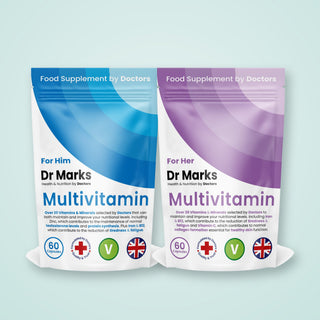
Dr Marks Women's Multivitamin
The Women's Multivitamin provides 18mg of iron (as ferrous bisglycinate) and 120mg of vitamin C per daily capsule. Iron contributes to normal formation of red blood cells and haemoglobin, to normal oxygen transport in the body and to the reduction of tiredness and fatigue. Vitamin C increases iron absorption.
To be transparent: 18mg is just above the NHS's 17mg "unlikely to cause harm" guide level, and below the 20mg at which the NHS says side effects become more likely. If you already take an iron supplement or prescribed iron, take thyroid medicine, or are pregnant or breastfeeding, speak to your GP or pharmacist before taking it. If you've been told you have low iron or anaemia, follow your GP's advice rather than using a multivitamin.
It's suitable for vegetarians. It contains beta-carotene: not suitable for smokers or people exposed to asbestos. It contains vitamin K, so if you take anticoagulant medicine such as warfarin, speak to your GP or pharmacist first. If you take levothyroxine, take it at least 4 hours apart. It contains iron, so it isn't suitable for people with haemochromatosis unless advised by their doctor.
Visit our website to find out more about the Dr Marks Women's Multivitamin.
Food supplements should not replace a varied, balanced diet and healthy lifestyle.
Frequently asked questions
How do I know if my iron is low?
You can't tell for certain from symptoms alone. A blood test (full blood count, often with ferritin) arranged by your GP is the only reliable way to know.
Should I take an iron supplement if I feel tired?
Not without getting checked first. Tiredness has many causes, and taking iron before a blood test can make the picture harder to read. If iron isn't the problem, extra iron won't help.
What is the best time to take iron?
Prescribed iron tablets work best on an empty stomach. The NHS suggests taking ferrous sulfate 30 minutes before eating or two hours after, but with food if it upsets your stomach. Leave two hours before tea, coffee, eggs or dairy. Follow the instructions you've been given.
Do women over 50 still need extra iron?
After the menopause, women need 8.7mg a day, the same as men. If you're still having periods, you may need more. Low iron after the menopause should always be checked by a GP.
Can vegetarians get enough iron?
Yes, with planning. Eat beans, pulses, nuts, fortified cereals and leafy greens, include vitamin C with meals and keep tea and coffee for between meals.
Can you have too much iron?
Yes. High doses can cause stomach side effects, and some people have conditions such as haemochromatosis where iron builds up. Don't take more than advised.
References
- NHS. Vitamins and minerals: iron. https://www.nhs.uk/conditions/vitamins-and-minerals/iron/ (accessed 19 October 2026)
- NHS. Iron deficiency anaemia. https://www.nhs.uk/conditions/iron-deficiency-anaemia/ (accessed 19 October 2026)
- NHS. Heavy periods. https://www.nhs.uk/conditions/heavy-periods/ (accessed 19 October 2026)
- British Dietetic Association. Iron: food fact sheet. https://www.bda.uk.com/resource/iron-rich-foods-iron-deficiency.html (accessed 19 October 2026)
- NICE Clinical Knowledge Summaries. Anaemia: iron deficiency. https://cks.nice.org.uk/topics/anaemia-iron-deficiency/ (accessed 19 October 2026)
- Stoffel NU et al. (2017). Iron absorption from oral iron supplements given on consecutive versus alternate days and as single morning doses versus twice-daily split dosing in iron-depleted women. Lancet Haematology 4(11):e524-33. https://pubmed.ncbi.nlm.nih.gov/29032957/ (accessed 19 October 2026)
- NHS. How and when to take ferrous sulfate. https://www.nhs.uk/medicines/ferrous-sulfate/how-and-when-to-take-ferrous-sulfate/ (accessed 19 October 2026)
- NHS. Levothyroxine. https://www.nhs.uk/medicines/levothyroxine/ (accessed 19 October 2026)
- NHS. Vitamins and minerals: B vitamins and folic acid. https://www.nhs.uk/conditions/vitamins-and-minerals/vitamin-b/ (accessed 19 October 2026)
- Scientific Advisory Committee on Nutrition (2010). Iron and health. https://www.gov.uk/government/publications/sacn-iron-and-health-report (accessed 19 October 2026)
- Department of Health and Social Care. Great Britain nutrition and health claims (NHC) register. https://www.gov.uk/government/publications/great-britain-nutrition-and-health-claims-nhc-register (accessed 19 October 2026)
Food supplements should not replace a varied, balanced diet and healthy lifestyle. Do not exceed the stated daily dose. Keep out of reach of children. If you are pregnant, breastfeeding, taking any medication or under medical supervision, speak to your GP or pharmacist before taking supplements. This article is general information and is not a substitute for personal medical advice. Dr Marks is an independent company and is not affiliated with or endorsed by the NHS.
About the authors
Dr Mark Wilshere MBChB MRCGP DCH BSc (Hons), GP and Co-Founder, Dr Marks (medical reviewer)
GMC no. 6144605
Dr Marc Crutchley MBChB MRCGP MSc BSc (Hons), GP and Co-Founder, Dr Marks
GMC no. 6144602
Last reviewed: 19 October 2026
Find out how we write, check and update our health content: our medical review process.